

When pipes need rehabilitating, you want the best solution. Modern pipe relining offers several ways to cure the new liner inside your old pipe. But which method works best? Let’s compare UV relining, ambient curing, and hot water/steam curing to help you make the right choice.
What Is CIPP Pipe Relining?
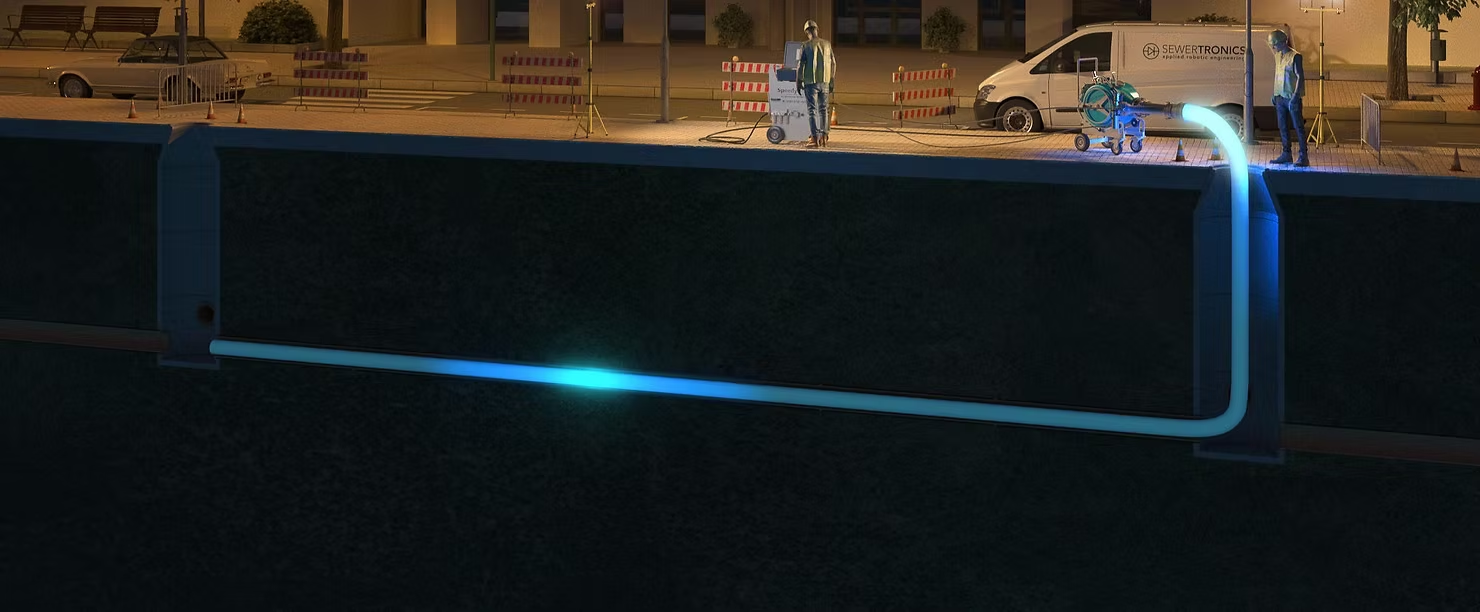
Cured-In-Place Pipe (CIPP) relining creates a new pipe inside your old damaged pipe. A flexible liner soaked with special resin gets inserted into the pipe. The resin then hardens (cures) to form a strong new pipe wall.
The magic happens during curing. This process turns liquid resin into solid plastic. There are three main ways to cure CIPP liners:
- UV relining – Uses ultraviolet light
- Ambient curing – Uses room temperature
- Hot curing – Uses hot water or steam
Each method has benefits and drawbacks. Your choice depends on your specific pipe problem, budget, and timeline.
UV Relining: The Fast and Modern Solution
UV relining uses ultraviolet light to cure the resin quickly. Special chemicals called photo-initiators react when hit by UV light. This creates a chemical reaction that hardens the resin in minutes.
How UV Relining Works
- A glass or felt fiber liner gets pulled into the pipe
- The liner inflates with air pressure
- A UV light train moves through the pipe
- The light cures the resin as it passes
- The process takes about 10-15 minutes per section
UV Relining Strengths
- Speed Champion: UV curing is incredibly fast. Most jobs finish in hours, not days. The actual curing takes just minutes per meter.
- Consistent Results: UV light provides even curing throughout the pipe. Temperature doesn’t affect the process, so you get reliable results every time.
- Clean Process: No hot water or steam means no messy cleanup. There’s no waste water to dispose of either.
- Strong Final Product: Research shows UV-cured liners often have higher strength than heat-cured ones. Using glass fiber reinforcement adds extra durability.
- Weather Independent: Hot or cold outside doesn’t matter. UV curing works the same in all conditions.
UV Relining Weaknesses
- Higher Equipment Cost: UV systems need specialized light equipment. This can make the initial setup more expensive.
- Limited to Shorter Runs: Very long pipes might need multiple setups or specialist longer cable lengths. This can add time and complexity.
- Needs Access Points: The UV light train often requires good access to both ends of the pipe section.
- Technical Skills Required: Operators need proper training to handle UV equipment safely.
Ambient Curing: The Simple Approach
Ambient curing lets the resin harden naturally at normal temperature. Special catalysts mixed into the resin start the curing process without added heat.
How Ambient Curing Works
- Resin gets mixed with catalyst on-site
- The liner is saturated and installed
- The resin cures over 2-8 hours at room temperature
- No additional equipment needed during curing
Ambient Curing Strengths
- Low Equipment Needs: Minimal equipment required. Just basic installation tools and a small air compressor.
- Cost Effective: Lower upfront costs make this popular for smaller jobs and tight budgets.
- Simple Process: Easier to learn and execute. Less technical training required.
- Small Footprint: Takes up less space on job sites. Good for residential areas with limited access.
Ambient Curing Weaknesses
- Slower Process: Takes several hours to cure completely. Weather can slow this down even more.
- Size Limitations: Works best for smaller diameter pipes (under 225mm). Larger pipes become difficult.
- Length Restrictions: Resin working time limits how long the liner can be. Shorter sections only.
- Temperature Dependent: Cold weather significantly slows curing time. Hot weather can make resin cure too fast.
- On-Site Mixing Required: Resin must be mixed fresh at the job site. No factory preparation possible.
Hot Water and Steam Curing: The Traditional Method
Hot water and steam curing use heat to speed up the resin reaction. This is the original CIPP method that’s been proven for over 50 years.
How Hot Curing Works
- Factory-prepared liners arrive ready to install
- Liner gets positioned in the pipe
- Hot water or steam circulates through
- Heat accelerates the curing process
- Cold water cools the liner when curing is complete
Hot Curing Strengths
- Proven Track Record: Decades of successful installations prove this method works.
- Factory Preparation: Liners can be impregnated with resin at the factory for consistent quality.
- Handles Large Jobs: Works well for big diameter pipes and long installation lengths.
- Predictable Results: Well-understood process with established procedures.
- Versatile: Works with various resin types including polyester, vinyl ester, and epoxy.
Hot Curing Weaknesses
- Longer Process: Total cure time can take 3-6 hours depending on the method used.
- Equipment Intensive: Requires boilers, pumps, and water handling equipment.
- Water Disposal: Large amounts of heated water need proper disposal after use.
- Weather Sensitive: Ground temperature affects curing efficiency.
- Safety Concerns: Hot water and steam create burn risks for workers.
- Environmental Issues: Steam curing can release chemical emissions that require safety precautions.
